
If you live in rural Staffordshire, Cheshire, Shropshire or Derbyshire, there’s a good chance your home runs on heating oil. Unlike urban properties connected to the gas mains, most country homes depend on oil-fired heating systems to stay warm through winter and provide hot water year-round.
Understanding how heating oil works and what affects its costs can save you hundreds of pounds each year while keeping your family comfortable. This guide covers everything you need to know about heating oil in 2026, from current pricing and storage regulations to choosing the oil tanks for home heating, and getting the most from your system.
Whether you’re new to oil heating or looking to manage your system more effectively, you’ll find practical advice to help you make smart decisions.

What is Heating Oil?
Heating oil is a liquid fuel refined from crude oil, designed specifically for heating systems. It powers the oil-fired boiler or furnace that heats your home and provides hot water. The fuel is delivered by tanker and stored in a tank on your property, typically holding between 1,200 and 2,500 litres for domestic use.
What is Kerosene?
Here’s where things can get confusing. In the UK domestic heating context, kerosene and heating oil are the same product. When you order heating oil for your boiler, you’re getting kerosene. The fuel is technically classified as Class C2 kerosene, sometimes called ’28-second oil’. This answers a common question: what is kerosene in relation to home heating? It’s simply the same fuel many suppliers refer to as domestic heating oil.
The confusion arises because kerosene has other uses beyond home heating. It powers jet engines and some portable heaters. But when UK suppliers talk about domestic heating oil or kerosene for your boiler. You might also hear it called burning oil or central heating oil, but these are all names for the same product.
The History of Kerosene
Kerosene has a fascinating history that spans over 150 years. The fuel was first distilled from coal in 1846 by Canadian geologist Abraham Gesner. By the 1860s, kerosene lamps were lighting homes and streets across Britain and America, revolutionising everyday life. For the first time, ordinary people could afford good quality lighting after dark.
In the UK, kerosene became known as paraffin oil and was widely used for lighting until electricity became widespread in the early 20th century. The transition to home heating came gradually. As coal fires gave way to more efficient heating systems in the mid-20th century, kerosene proved ideal for rural properties without gas connections.
Today, while kerosene no longer lights our homes, it remains essential for heating approximately 1.5 million rural properties across the UK.

Why Rural Homes Rely on Heating Oil
The main reason is straightforward: most rural properties aren’t connected to the gas mains network. Gas pipes primarily serve built up areas where connecting numerous homes is economically viable. Extending pipelines to scattered country properties simply isn’t practical, making heating oil the best alternative.
Heating oil offers several advantages that suit rural living well. The fuel is delivered directly to your door and stored on-site, giving you complete independence from grid infrastructure. Your heating works even during power cuts, provided your boiler has a manual ignition option. The fuel is also notably safe to store compared to alternatives like LPG or natural gas, as it requires much higher temperatures to ignite.
Even for larger country properties, heating oil provides excellent heat output. It efficiently warms spacious farmhouses, converted barns and period properties that often have substantial heating requirements. The flexibility to order fuel when prices are favourable rather than paying fixed monthly tariffs also appeals to homeowners who appreciate having control over their energy spending.
If you’ve recently moved to a property that relies on heating oil, take a look at our handy guide to help you get started.
What is Heating Oil Used For?
The primary use of heating oil is powering domestic central heating systems. Your oil-fired boiler heats water that circulates through radiators or underfloor heating to warm your home. The same system typically provides all your hot water for taps, showers and baths, making it a complete heating solution.
Beyond residential properties, heating oil serves many other purposes across rural communities. Village halls, sports clubs and community centres often rely on oil heating. Rural schools and churches in areas without gas connections depend on oil-fired systems. Small businesses, farm workshops and agricultural buildings frequently use heating oil for both space heating and specific operational needs.
Some properties combine heating oil with renewable technologies. They might use solar thermal panels or heat pumps alongside their oil boiler, with the oil system providing reliable backup during peak demand or when renewable generation falls short.

How Much Does Heating Oil Cost in 2026?
As of February 2026, heating oil prices across the UK range from approximately 54p to 77p per litre, depending on your location, order size and supplier. The national average currently sits around 72p per litre for standard 1,000-litre orders, with prices in Staffordshire generally tracking close to this figure.
These prices represent a much more favourable environment compared to the peak of £1.37 per litre seen in March 2022 during the energy crisis.
However, current conflict in Iran is affecting oil prices, significantly increasing the wholesale cost of oil, and reducing availability. Although we are yet to reach the high prices of March 2022, it’s essential to keep your eye on the latest price fluctuations during times of uncertainty, and contact the Stoddards team to find out the latest prices.
In practical terms, filling a typical 1,200-litre domestic tank currently costs between £648 and £924. A 500-litre top-up runs approximately £270 to £385. For quick reference, 500 litres of heating oil cost roughly within this range for most households, depending on location and timing.
These prices exclude VAT, which is charged at just 5% for domestic heating fuel rather than the standard 20% rate.
Ready to get today’s exact price for your postcode? Get a Quote Now or call us on 01538 752253
Current UK Heating Oil Price Trends
Understanding price trends helps you make smarter purchasing decisions. The heating oil market in early 2026 is influenced by several key factors that affect what you pay.
The current conflict in Iran is causing higher than normal prices for the time of year, once a resolution is found and transportation routes are re-established, this should bring prices down to a more expected, and stable level.
Currency fluctuations play an important role too. Because heating oil is traded internationally in US dollars, the pound-to-dollar exchange rate directly affects UK consumer prices. Recent sterling stability has helped maintain competitive pricing across the market.
Seasonal patterns continue to influence costs. Winter demand naturally pushes prices higher as households order fuel simultaneously. Spring and summer typically see reduced demand and consequently lower prices, though this seasonal variation is less pronounced than in previous years due to better supply chain management.
For historical context and future projections, consulting heating oil price charts helps identify optimal ordering windows throughout the year. You can also consult our heating oil price chart UK for a clear, regional view of heating oil price trends.
For detailed heating oil price chart trends and historical data, see our comprehensive price trends analysis.
Is Heating Oil Expensive Compared to Other Fuels?
The answer depends on your specific circumstances. Heating oil generally costs more per unit of heat than mains gas. However, for the approximately 1.5 million UK homes without gas connection, this comparison is somewhat academic since mains gas simply isn’t an option.
When evaluating costs, consider your total system efficiency rather than just fuel prices. Modern condensing oil boilers achieve efficiency ratings of 90% or higher, meaning very little energy is wasted. Regular servicing maintains this efficiency, ensuring you extract maximum heat from every litre. Oil heating systems also often have lower installation and maintenance costs compared to alternatives like ground-source heat pumps.
Unlike fixed-tariff gas customers, you can monitor market prices and order when rates are most favourable. Buying in larger quantities typically reduces the per-litre cost, and joining local fuel-buying groups with neighbours can secure even better rates through collective purchasing power.
Learn more about heating oil tank costs and filling strategies in our detailed cost guide.
Best Time of Year to Buy Heating Oil
Strategic timing can significantly reduce your annual heating costs. Generally, spring and summer months offer the most competitive prices as demand drops when households switch off their heating. May through August often presents the best value, with prices typically 10-15% lower than winter peaks.
However, market conditions vary year by year depending on global factors. Monitoring price trends weekly during the shoulder seasons of March-April and September-October can reveal opportunities to fill your tank before prices climb. Many experienced oil users aim to fill their tanks to capacity during summer, ensuring they have sufficient fuel to last through the more expensive winter months.
Discover the optimal purchasing strategy in our guide to the best time of year to buy heating oil.

Emergency Heating Oil Delivery
Running completely out of heating oil is a situation you want to avoid, but when it happens, emergency delivery services provide an essential lifeline. Most reputable suppliers in Staffordshire and surrounding counties offer same-day or next-day emergency deliveries, though these typically carry premium charges. If you find yourself without fuel in winter, emergency heating oil can restore heat quickly while you arrange a full delivery.
Emergency deliveries usually cost an additional 10-20p per litre above standard rates, plus potential call-out fees. Minimum order quantities for emergency service are often lower than standard deliveries, but the premium pricing makes these orders significantly more expensive than planned deliveries.
The best approach is prevention through proper monitoring:
- Install a tank gauge so you can check your fuel level easily, and even have it notify your supplier when you’re running low
- Set calendar reminders to check your tank monthly during winter
- Order when you reach a quarter full rather than waiting until you are nearly empty
- Keep your supplier emergency number readily accessible
Run out of heating oil? We offer same-day emergency delivery across Staffordshire and Cheshire.
Order your emergency delivery online or call us on 01538 752253
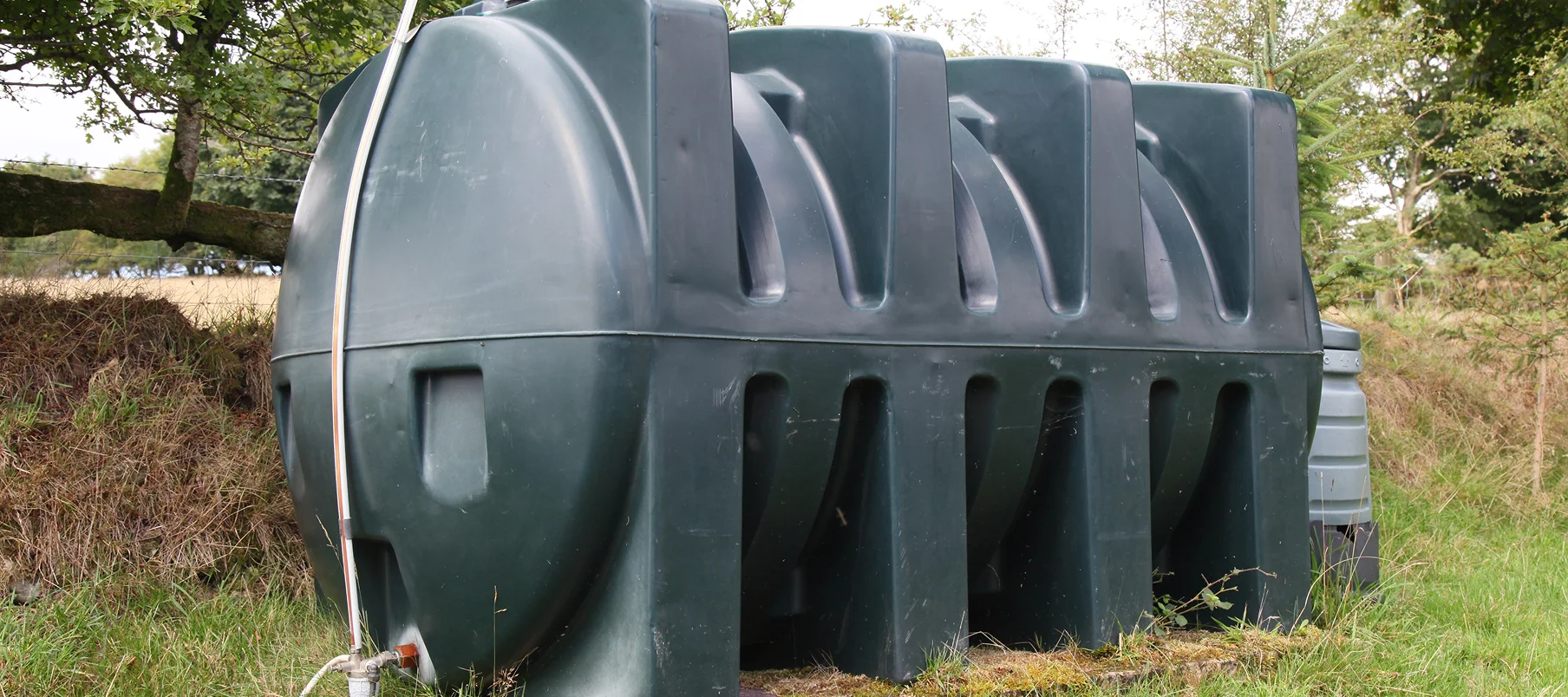
Heating Oil Storage: Tanks and UK Regulations
Proper storage is essential for safety, efficiency and legal compliance. Your storage tank represents a significant investment that requires careful selection and ongoing maintenance.
Understanding UK regulations ensures your installation meets legal requirements whilst protecting your property and the environment.
Domestic heating oil tanks typically range from 1,200 litres for smaller homes to 2,500 litres for larger properties. Tank construction materials include steel, which offers robust protection and longevity, and polyethylene (plastic), which resists corrosion and is lighter for installation in challenging locations.
Bunded vs Single-Skin Oil Tanks
Modern oil storage increasingly favours a bunded heating oil tank. But, what is a bunded oil tank? It’s a tank that features a double-wall construction with an outer containment layer. If the inner tank develops a leak, the outer bund captures the fuel and prevents environmental contamination. This tank-within-a-tank design has become the industry standard for new installations and is legally required in many circumstances.
Single-skin tanks lack this secondary containment but cost considerably less. They remain acceptable in certain installations where alternative spill protection measures are in place, such as impermeable catchment areas or drip trays. However, the additional security and environmental protection of bunded tanks generally justify their higher initial cost.
The environmental liability from a leaking oil tank can run into thousands of pounds for soil remediation and watercourse decontamination. This makes the extra investment in bunded storage a sensible precaution, particularly as insurance premiums are often lower for bunded systems.
Did you know? Despite the higher cost of a bunded oil tank, a bunded tank carries a 10 year guarantee, compared to a 1 year guarantee on a single skin tank.
UK Heating Oil Tank Regulations
Oil storage in England is governed by the Water Resources (Control of Pollution) (Oil Storage) Regulations 2001, with Scotland and Wales maintaining similar frameworks. These regulations establish minimum standards for domestic and commercial oil storage to protect water resources and soil quality.
Key regulatory requirements include:
- Secondary containment for tanks over 200 litres (either bunded tanks or impermeable bases with kerbing)
- Containment capacity of at least 110% of the tank volume
- Minimum distance of 10 metres from any watercourse, well or borehole
- Clear capacity markings on all tanks
- Properly labelled fill pipes indicating fuel type
- Weatherproof vent pipes to prevent water ingress
- Automatic overfill prevention devices or supervised filling
- Regular inspections, typically annually, to identify potential issues
For new installations or tank replacements, using a registered OFTEC (Oil Firing Technical Association) installer ensures your setup meets all current regulations and provides the necessary certification.
For complete details on heating oil storage regulations and compliance requirements, see our in-depth regulatory guide.
Heating Oil Tank Gauges
A reliable heating oil tank gauge is one of the most valuable additions to your oil heating system. It provides at-a-glance fuel level information, enabling you to plan deliveries strategically rather than reactively. This simple addition prevents the stress and expense of emergency orders whilst helping you optimise purchasing decisions.
Traditional float gauges offer basic level indication through mechanical movement, whilst digital alternatives provide percentage readouts and can connect to smartphone apps. Advanced smart gauges send automatic alerts when fuel reaches predetermined levels, and some even integrate directly with supplier ordering systems for truly hands-off management.
The investment in a quality gauge, typically between £50 and £200 depending on features, quickly pays for itself through better purchasing decisions and eliminated emergency delivery premiums.
Not sure how to check your heating oil level? Check out our recent guide.

Heating Oil Additives: Do They Actually Work?
Heating oil additives are chemical treatments designed to enhance fuel performance and prevent common problems. They address issues ranging from cold weather fuel gelling to bacterial growth in storage tanks. The key question for homeowners is whether these products deliver meaningful benefits worth their cost.
So, do heating oil additives work? The evidence suggests that quality additives do provide tangible improvements, though results depend on product selection and your specific system conditions. Well-formulated additives address real issues that affect heating oil systems, particularly in the UK climate where temperature fluctuations and moisture ingress create challenging conditions.
Types of Heating Oil Additives
Different additive formulations target specific problems. Cold flow improvers prevent wax crystal formation when temperatures drop below freezing, maintaining fuel flow to your boiler during harsh winter conditions. This proves particularly valuable in exposed rural locations where tanks experience extreme temperatures.
Biocides combat bacterial and fungal growth that thrives in the water-fuel interface inside storage tanks. These microorganisms produce sludge that clogs filters and reduces system efficiency. Regular biocide treatment keeps tanks clean and prevents costly maintenance issues.
Combustion enhancers improve the burn quality of your fuel, potentially increasing boiler efficiency by several percentage points. They reduce soot formation, minimise carbon deposits and can extend service intervals. Stabiliser additives extend the storage life of fuel, preventing degradation when oil sits unused for extended periods during warmer months. In milder conditions, a heat oil additive aimed at combustion efficiency may be all you need.
Exocet Heating Oil Additive
Among heating oil additives available in the UK, Exocet stands out as a well-established brand specifically formulated for British conditions. Many homeowners choose the Exocet heating oil additive as a simple, proven option for UK systems. Their products combine multiple treatment functions in single-dose bottles, simplifying the additive process whilst addressing several issues simultaneously.
Exocet additives provide winter protection down to -15°C, well beyond typical UK winter temperatures, whilst simultaneously cleaning your fuel system and improving combustion efficiency. The cleaning action removes existing sludge deposits and prevents new formation, keeping fuel lines, filters and injectors operating optimally.
Application is straightforward: simply pour the required dose into your tank during or immediately after filling. The additive disperses throughout the fuel, providing system-wide protection. Most heating engineers recommend autumn application before winter heating season begins, establishing protection before problems arise rather than attempting remedial treatment.
Regular use of quality additives like Exocet can reduce fuel consumption by 2-5% through improved combustion efficiency, potentially offsetting the product cost whilst extending boiler lifespan through reduced wear and cleaner operation.

How Long Does Heating Oil Last in Storage?
Properly stored heating oil maintains quality for 18-24 months under ideal conditions, though this timeframe can vary based on storage environment and fuel quality. Understanding degradation factors helps you manage your fuel effectively and recognise when oil quality may be declining.
Temperature fluctuations, water contamination and oxygen exposure accelerate fuel degradation. Oil stored in fluctuating temperatures develops condensation, introducing moisture that supports bacterial growth and accelerates chemical breakdown. Tanks positioned in direct sunlight or exposed to severe temperature swings experience faster degradation than those in shaded, stable environments.
Several warning signs indicate deteriorating fuel quality:
- Unusual or strong odours
- Visible sediment or cloudiness
- Declining boiler performance or difficulty firing
- Excessive smoke production
- Increased frequency of filter changes
Maximising fuel lifespan requires attention to storage conditions. Ensuring tanks remain sealed against water ingress is paramount, as moisture is the primary degradation catalyst. Using fuel regularly rather than allowing it to sit stagnant helps maintain quality. Adding stabiliser additives when filling for summer storage extends usable life by slowing oxidation.
Professional tank cleaning every 5-10 years removes accumulated sludge and water, providing a clean environment that helps preserve fuel quality. Many heating engineers offer tank inspection and cleaning services, often identifying and addressing issues before they affect system performance. While delivery drivers will often perform a brief tank check, it’s vital to ensure you’re properly maintaining your tank, and regularly checking it for changes.
Quick Tips for Keeping Your Tank in Top Condition:
Limit vegetation growth around your tank as much as possible to avoid excess sediment getting in.
Make sure the lid is always secured to keep your tank safe and reduce the risk of theft.

Practical Tips for Efficient Heating Oil Use
Maximising your heating oil investment involves more than just finding competitive prices. System maintenance, home insulation and smart usage habits all contribute to reduced consumption and lower annual costs. Implementing these strategies can reduce your fuel usage by 15-25% compared to poorly maintained systems.
Annual boiler servicing by an OFTEC-registered technician maintains peak efficiency and identifies potential problems before they cause breakdowns. Regular filter changes, nozzle cleaning and combustion adjustment ensure your boiler extracts maximum heat from every litre. Well-maintained systems achieve efficiency ratings approaching 90%, whilst neglected equipment can drop below 70%, effectively wasting nearly a third of your fuel.
Home insulation improvements deliver remarkable returns on investment. Loft insulation, cavity wall filling and draught-proofing reduce heat loss, allowing your boiler to maintain comfortable temperatures with less fuel consumption. Modern double glazing and efficient external doors further minimise heat escape.
Smart thermostat controls and zone heating enable precise temperature management. Programming heating to match your actual occupancy patterns rather than running continuously saves substantial fuel whilst maintaining comfort when needed. Avoid heating unused rooms unnecessarily.
Bleeding radiators annually ensures hot water circulates efficiently throughout your system. Air pockets reduce heat output, forcing your boiler to work harder and consume more fuel to achieve target temperatures. This simple maintenance task takes just minutes but can noticeably improve heating performance.
Building relationships with reliable local suppliers like Stoddards, who offer the Cold Winter Priority Scheme, often yields benefits beyond competitive pricing. Established customers may receive priority scheduling during busy periods, access to emergency services and advance notice of promotional offers. Local suppliers understand regional requirements and provide personalised service that larger national companies cannot match.
Conclusion: Making the Most of Your Heating Oil System
Heating oil remains a practical and reliable heating solution for rural homes across Staffordshire and surrounding counties. Understanding how the fuel works, what drives pricing and how to maintain your system efficiently empowers you to minimise costs whilst ensuring your home stays warm and comfortable year-round.
Combining smart purchasing timing with quality additives, proper maintenance and home efficiency improvements creates a comprehensive approach that reduces costs whilst improving reliability.
Whether you’re evaluating tank replacement options, considering additive treatments or planning your next fuel order, the principles outlined in this guide provide the foundation for informed decision-making. Regular monitoring of price trends, proactive maintenance scheduling and attention to storage regulations ensure your heating system serves you reliably for many years to come.
Order Your Heating Oil from Stoddards Today
For reliable heating oil delivery across Staffordshire, Cheshire, Shropshire and Derbyshire, Stoddards provides experienced service you can trust. As an established local supplier with deep roots in the community, we understand rural heating requirements and deliver competitive prices with dependable service.
Why Choose Stoddards Fuels?
Our fleet handles everything from narrow access deliveries to large tank fills, ensuring you receive fuel when you need it regardless of property constraints. We offer same-day emergency delivery for urgent situations, next-day standard service and flexible payment options to suit your requirements.
Our friendly, experienced and local team are just a phone call away and always happy to help. Our in-depth knowledge of the Staffordshire area means that we’re ready to offer our support when you need it most.
Whether you need a complete tank fill, a top-up order or advice on tank replacement and maintenance, our knowledgeable team is here to help. Get your instant quote online or call us on 01538 752253 to discuss your heating oil needs.