
Who can use red diesel is one of the most common questions we get asked, and it’s more complicated than most people expect. The rules changed significantly in April 2022, and a lot of businesses that used to qualify no longer do, whilst some assume they’ve lost eligibility when they actually haven’t.
This guide breaks down exactly who’s covered under current HMRC rules, what’s changed for farms, homes and commercial operators, and what happens if you get it wrong. If you’re ordering fuel for the first time, or you’re not sure your current use still qualifies, this should clear it up.
Who Can Use Red Diesel in the UK?
Red diesel is legally restricted to specific “excepted machines” used for specific purposes, not just certain industries. HMRC’s current rules cover agriculture, horticulture, aquatic farming and forestry, rail, most marine use, non-commercial heating and power, golf courses and sports clubs, and travelling fairs and circuses.
The key point that catches people out is that eligibility depends on what the vehicle or machine is actually being used for at the time, not just what type of business you run or what category your vehicle falls into. The same digger can be perfectly legal on a farm drainage job and illegal on a housing development, even though it’s the same machine and the same owner. This is all set out in HMRC’s Excise Notice 75, which was last updated in June 2026.
It’s also worth knowing that “red diesel” isn’t the only rebated fuel these rules cover. The same eligibility categories apply to rebated biodiesel, bioblend and hydrotreated vegetable oil (HVO) when they’re marked and supplied for the same qualifying uses, and to marked kerosene used for generating heat. If you’re weighing up red diesel against a renewable alternative for eligible machinery, the “who can use it” question is largely the same either way.
Red Diesel Rules for Farms and Agricultural Businesses
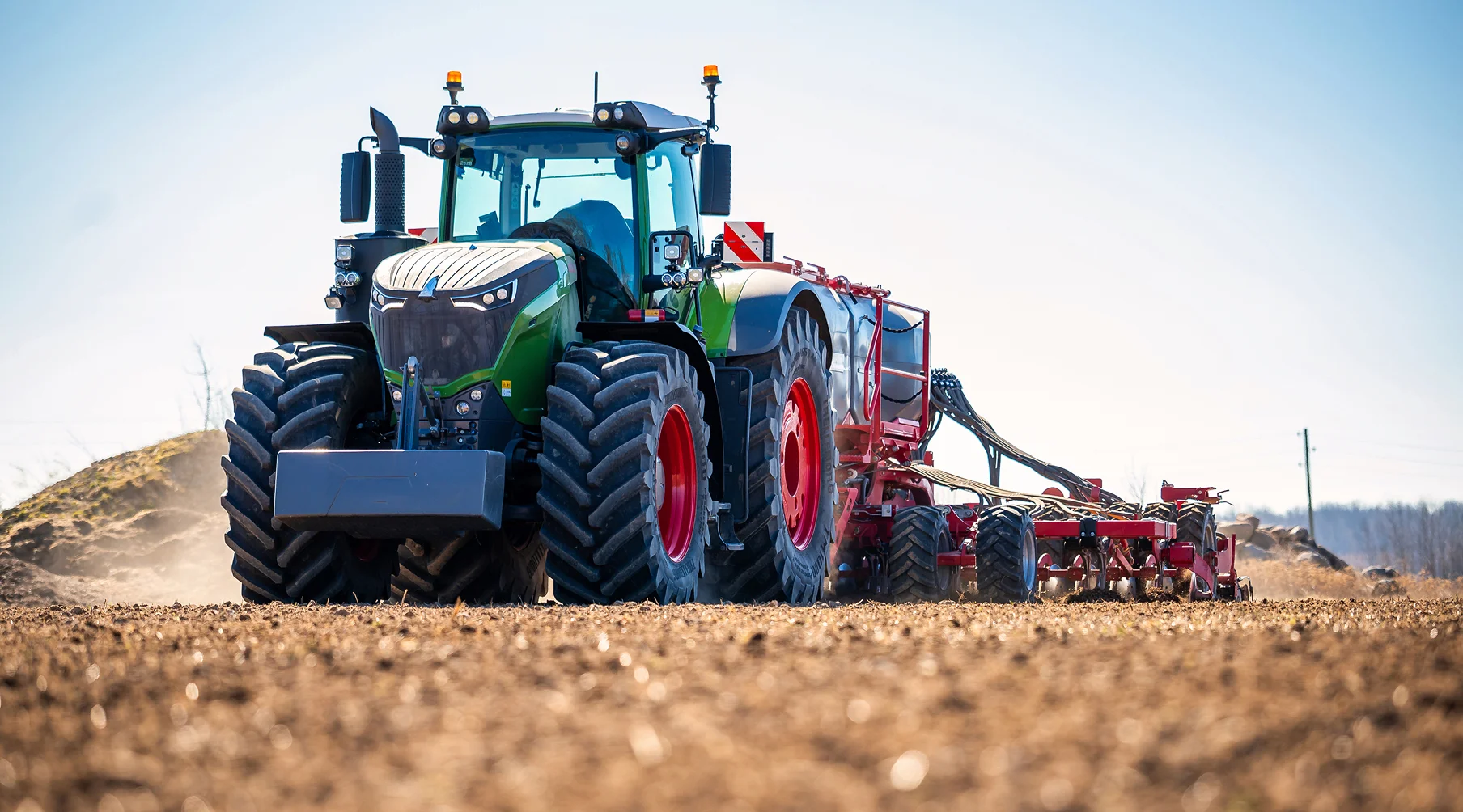
Agriculture remains by far the broadest eligible category. If you’re using a vehicle or machine for genuine farming, horticultural, forestry or aquatic farming work, red diesel is almost always permitted.
That covers tractors, combine harvesters, sprayers, forage harvesters, grain dryers and most other off-road farm machinery. It also covers moving produce or livestock around your own land, and short hops on public roads between two areas of land you own or manage, provided the distance is under 1.5 kilometres. Contractors carrying out genuine agricultural, horticultural or forestry work for someone else are covered too, driving to and from the job, carrying the equipment they need, and removing any produce or waste that results from it.
A few less obvious activities are also covered, including clearing ditches and drainage where the work benefits agricultural land, cutting and drying timber you’ve harvested for firewood, and maintaining unsealed farm tracks and forest trails. Machines used purely for tree surgery and arboriculture, such as woodchippers and stump grinders, are generally covered too, even away from a working farm.
What isn’t covered, even on a working farm, is general haulage. If your only involvement is transporting someone else’s crops or livestock rather than growing or rearing them yourself, that counts as haulage rather than agriculture, and it needs white diesel. The same applies to landscaping work that falls outside HMRC’s specific definition of horticulture, and to keeping animals purely for sport or recreation rather than production.
If you supply your own agricultural fuel, it’s worth checking your exact use against these categories rather than assuming farm ownership alone is enough.
Can You Use Red Diesel to Heat Your Home?
Yes. Red diesel can legally be used to generate heat and electricity for non-commercial premises, which includes most private homes. In practice, though, very few domestic heating systems are actually designed to run on it.
The vast majority of UK homes with oil heating use kerosene, not red diesel. Kerosene is refined and marked differently, and using red diesel in a boiler designed for kerosene can cause problems with the system. We’ve covered this in more detail in our guide to what kerosene is and how it differs from red diesel. If you’re heating a private home, kerosene is almost always the fuel you actually need, even though red diesel is technically permitted.
The non-commercial rule also extends further than most people realise. Charities delivering their core purpose, schools, churches, town halls and similar public buildings can generally use rebated fuel too, provided the premises aren’t being used to trade for profit. If you’re a domestic customer unsure which fuel your system needs, it’s worth checking before you order.
What About Construction, Plant and Other Machinery?
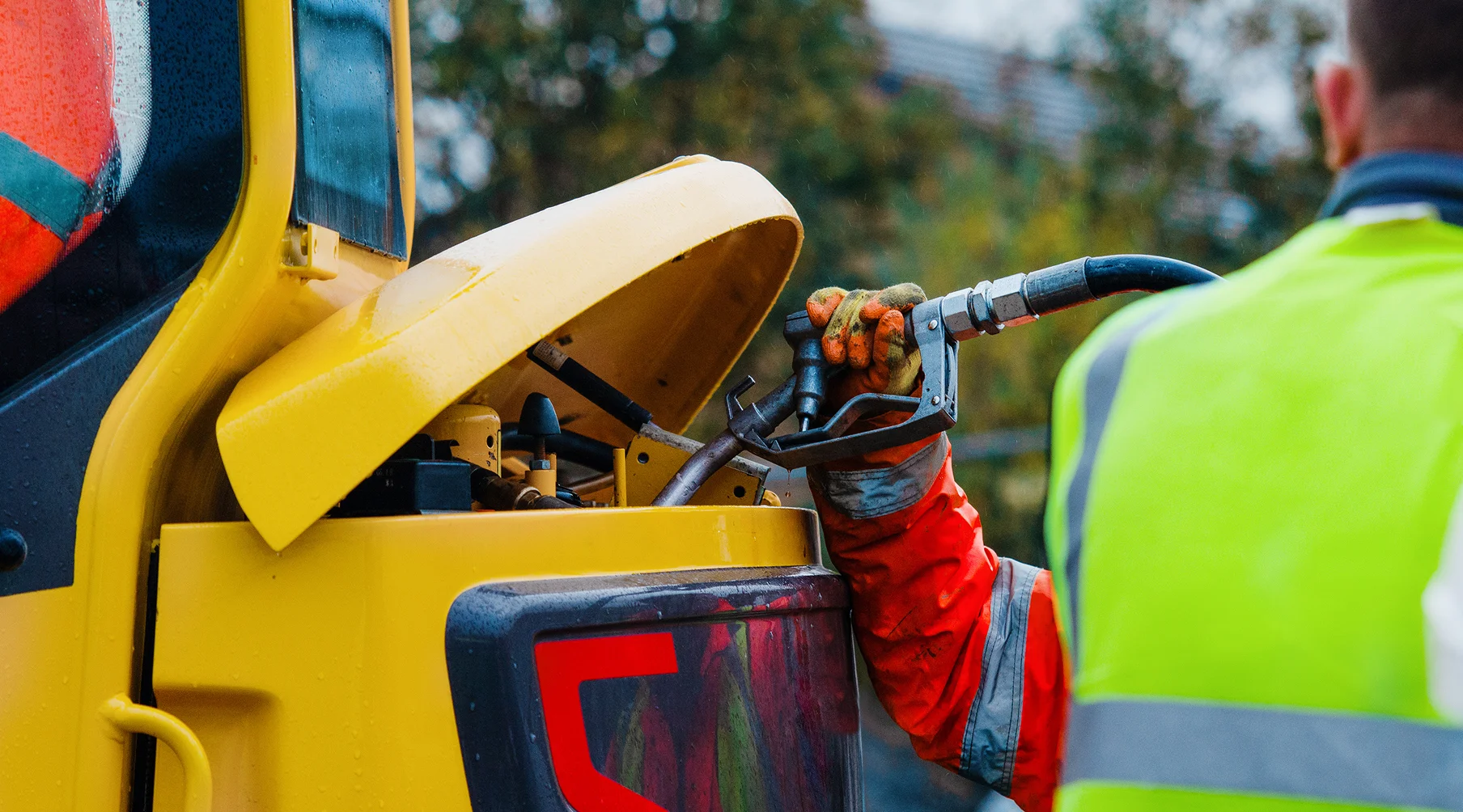
This is where the April 2022 changes hit hardest, and where the most confusion still exists. General construction, manufacturing and haulage lost their entitlement to red diesel outright. But certain machinery, sometimes called “special vehicles” under HMRC rules, including diggers, mobile cranes, mobile pumping vehicles, works trucks and road rollers, can still use red diesel if the work itself qualifies as agricultural, horticultural, forestry, or is carried out on a golf course or community sports club land.
In other words, it’s the job that determines eligibility, not the machine. A mini digger clearing a farm drainage ditch can legally run on red diesel. The same digger on a general building site the following week cannot, and needs white diesel instead. Businesses that operate across both types of site need to manage this carefully, including keeping the two fuels properly separated and flushing tanks fully when a machine’s use changes. HMRC’s rules on these categories were most recently clarified in an April 2022 policy update, which remains the basis for today’s rules.
If your operation has moved into general building or civil engineering work, our commercial fuel team can help you plan a compliant switch to white diesel for that side of the business.
Other Permitted Uses: Rail, Marine, Golf and More
A handful of other sectors keep their red diesel entitlement. Rail vehicles, including locomotives, passenger trains and track maintenance vehicles, can use red diesel for propulsion. Boats and other vessels can generally use it too, with the exception of private pleasure craft, which must declare and pay full duty on any fuel used for propulsion. Golf courses, driving ranges and land maintained by community amateur sports clubs remain eligible, as does equipment used to operate or maintain travelling fairs and circuses.
What Can’t You Use Red Diesel For?
A few uses are firmly off-limits, regardless of the type of business involved:
- Any vehicle being driven on a public road, with no exceptions for convenience or emergencies
- Heating or power for commercial premises, such as shops, offices, warehouses or factories
- General construction, manufacturing and industrial plant not tied to agricultural, horticultural or forestry work
- Haulage and transport operations, unless directly incidental to your own farming, horticultural or forestry activity
- Private pleasure boats, other than the declared and duty-paid propulsion allowance
- Equestrian use, for stables, livery yards, or general keeping of animals for sport or recreation
If any of this applies to you, you’ll need to switch to standard white diesel (DERV) instead.
What Happens If You Use Red Diesel Illegally?
HMRC actively tests fuel in vehicles, machinery and storage tanks, and the red dye makes misuse straightforward to detect. If you’re caught using red diesel outside a qualifying purpose, HMRC can seize the vehicle or machine involved, and you’ll typically have to pay the evaded duty going back up to 4 years, plus a penalty on top. In more serious or repeated cases, criminal prosecution is possible, carrying an unlimited fine or up to 7 years in prison. HMRC’s full enforcement powers are set out in Excise Notice 75.
There’s no allowance for “just this once.” Even a single trip on a public road, or a one-off delivery to a non-qualifying site, counts as misuse if the vehicle isn’t entitled to use rebated fuel for that purpose. HMRC also doesn’t permit any vehicle or machine to switch between rebated and full-duty fuel using separate tanks, so mixed-use operations need to manage fuel properly rather than relying on two supplies in the same equipment.
How to Stay Compliant
A few habits go a long way toward keeping you on the right side of the rules:
- Check your specific use against HMRC’s categories before ordering, rather than assuming your industry or vehicle type is automatically covered
- Keep basic records of what red diesel is used for, particularly if your operation is mixed-use
- Flush fuel tanks fully before switching a vehicle or machine to a non-qualifying use
- Ask your supplier if you’re ever unsure, especially for contracting work that crosses between agricultural and general commercial jobs
Who Can Use Red Diesel: Quick Answers
Is it illegal to use red diesel?
No, red diesel itself is entirely legal. What’s illegal is using it in a vehicle or for a purpose that doesn’t qualify under HMRC’s rules, most commonly using it in a road vehicle or for commercial premises heating.
Can construction companies use red diesel at all?
Only in limited circumstances. General construction plant on a standard building site no longer qualifies. The same machine can still use red diesel if it’s genuinely being used for agricultural, horticultural or forestry work, or on a golf course.
Can I use red diesel in my car if I run out of white diesel?
No. There’s no emergency exemption for road vehicles. Using red diesel in a car or van, even briefly, is treated as misuse and can result in a penalty.
Do I need to prove my red diesel use is legitimate?
You should be able to show what the fuel was used for if HMRC asks, particularly if you operate mixed-use vehicles or machinery. Keeping straightforward records of use is good practice even where it isn’t a strict legal requirement.
Can I use red diesel in a generator or heater on a commercial site?
Only if the generator or heater is primarily powering non-commercial premises, or the site itself qualifies under agriculture, horticulture or forestry. A generator running purely for a commercial office, shop or warehouse needs white diesel instead.
Order Red Diesel From a Compliant Local Supplier
If your farm, site or business qualifies, we deliver red diesel across Staffordshire, Cheshire, Shropshire and Derbyshire as a family-run, JET-approved supplier. If you’re not sure whether your use qualifies, get in touch with our team before you order and we’ll help you work it out.