
If you run a diesel car, van, tractor or lorry, you’ve probably asked yourself ‘how long does AdBlue last?’ It’s a fair question, and it actually has two answers. The first is how many miles (or engine hours) you’ll get from a tank. The second is how long AdBlue keeps in a container before it starts to go off.
At Stoddards, we supply AdBlue alongside road diesel and red diesel to homes, farms and businesses across Staffordshire, Cheshire, Shropshire and Derbyshire, so we’re asked both versions of the question regularly. Below, we explain typical usage for cars, vans and farm machinery, the official shelf life, and how to store AdBlue so none of it goes to waste.
How Long Does AdBlue Last? The Short Answer
In a car, a full AdBlue tank typically lasts somewhere between 3,000 and 12,000 miles, depending on the vehicle and how it’s driven. In storage, sealed AdBlue lasts at least 18 months at normal UK temperatures, and up to three years if it’s kept cool. Heat and sunlight are what shorten its life.
AdBlue is 32.5% high-purity urea and 67.5% deionised water. A system called selective catalytic reduction (SCR) sprays it into the exhaust to turn harmful nitrogen oxides (NOx) into nitrogen and water vapour. It has its own tank and never goes in with your DERV (road diesel).
Here’s a quick summary:
- Cars: roughly 1 litre every 600 miles, with a top-up every 3,000 to 12,000 miles
- Vans, lorries and tractors: usually around 3 to 6% of the diesel burned
- Sealed and stored at 25°C or below: at least 18 months
- Sealed and stored at 10°C or below: at least 36 months
- Opened containers: best used within a few months
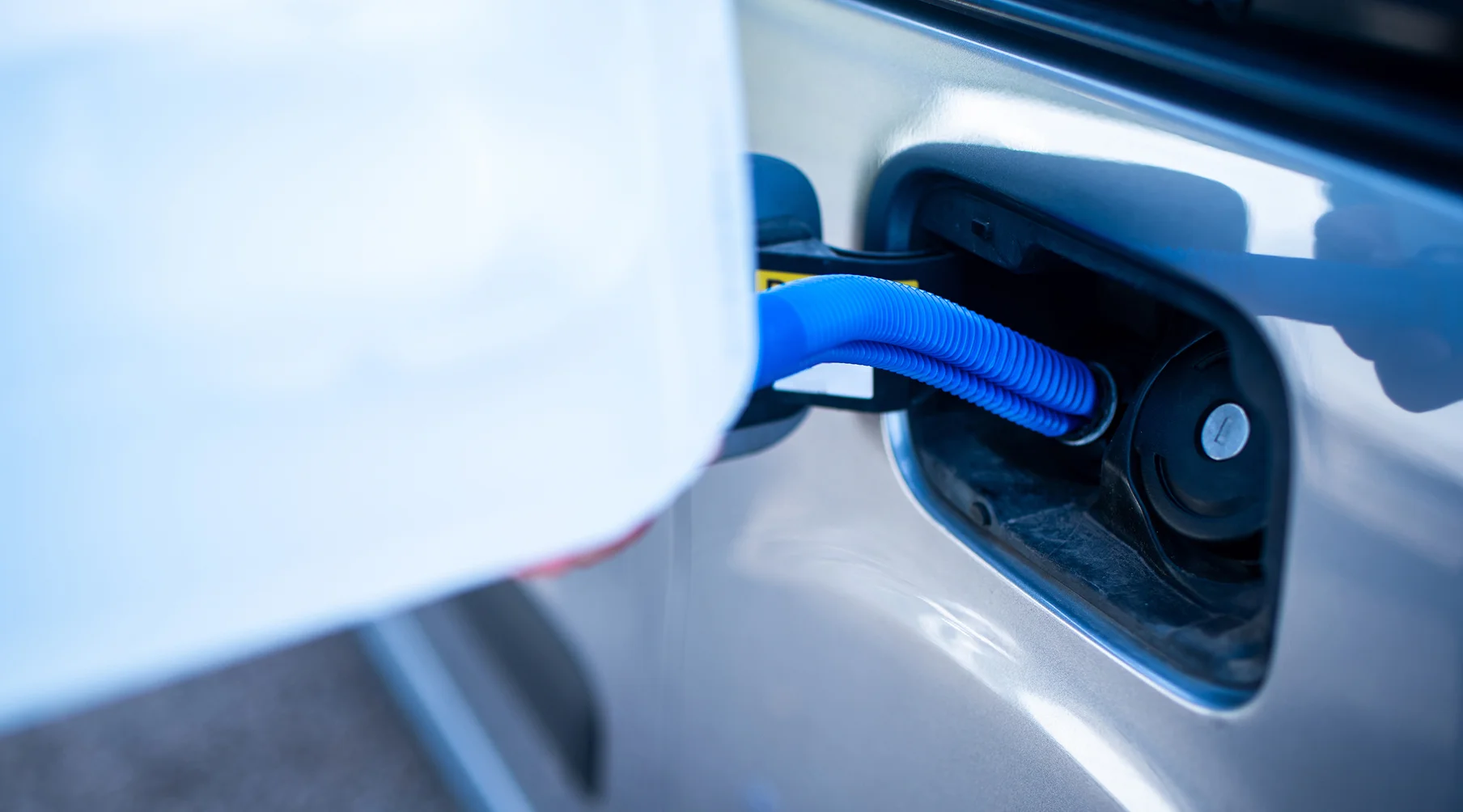
How Many Miles Does AdBlue Last?
Most diesel cars use about 1 litre of AdBlue every 600 miles, though harder driving can push that closer to a litre every 350 miles. With tank sizes varying from car to car, you could need a top-up anywhere between every 3,000 and every 12,000 miles. Most drivers top up at least once between services.
Those figures come from the AA’s AdBlue guidance for drivers, and they match what we see with local customers. Your handbook will tell you exactly how big your AdBlue tank is, which is the quickest way to work out your own range.
You won’t be caught out without warning. Most vehicles show a dashboard message when there’s around 1,500 miles’ worth of AdBlue left, usually with a countdown that gets more frequent as the level drops.
What affects how quickly you use AdBlue?
AdBlue use rises with engine load. The harder an engine works, the more NOx it produces, and the more AdBlue the SCR system injects to clean it up. That’s why two drivers with the same vehicle can see very different top-up intervals.
- Heavy loads and towing: a full van or a car pulling a horsebox uses more
- Hilly routes: steep Peak District and Moorlands lanes work an engine harder
- Driving style: sharp acceleration uses more than smooth driving
- Tank size: a bigger tank simply goes longer between top-ups
How long does AdBlue last in a tractor or farm machinery?
Tractors, telehandlers and combines measure AdBlue use in engine hours, not miles. As a rule of thumb, expect to use AdBlue at around 3 to 6% of your diesel consumption. For a tractor burning 20 litres of diesel an hour, that’s roughly 0.6 to 1.2 litres of AdBlue per hour.
Heavy work sits at the top end of that range. Independent tests reported by Farmers Weekly measured AdBlue use of between 4.6% and 6.9% of diesel on SCR-equipped tractors. At drilling or harvest, keep an IBC (a 1,000-litre bulk tank) or an AdBlue dispenser close to hand so nobody’s left waiting in the field.
Does AdBlue Go Off? How Long It Lasts in Storage
Yes, AdBlue does go off. Over time, the urea slowly breaks down, and warmth speeds that up. Under the international storage standard for AdBlue, product kept at 25°C or below should last at least 18 months, and product kept at 10°C or below should last at least 36 months.
Here’s how temperature affects shelf life:
| Constant storage temperature | Minimum shelf life |
|---|---|
| 10°C or below | 36 months |
| 25°C or below | 18 months |
| 30°C or below | 12 months |
| 35°C or below | 6 months |
| Above 35°C | Test every batch before use |
[Source: ISO 22241-3, the standard for handling, transporting and storing AdBlue]
For most of the year, UK temperatures sit comfortably below 25°C, so a sealed container in a cool garage or outbuilding should easily reach 18 months. The real risk is summer heat. An IBC left in full sun, or drums under a tin roof, can get far hotter than the air outside.
One thing to watch is the date printed on a container, it’s usually the manufacture date, not a best-before date. Count forward from there when you’re checking how old your stock is.
How long does AdBlue last once opened?
Once opened, AdBlue is best used within a few months, and many suppliers suggest no more than about six. Exposure to air lets water evaporate, which changes the urea concentration and can cause crystals to form. An open or loose cap also lets in dust and dirt.
The simplest fix is to buy a pack size you’ll use in one or two fills, and to screw the cap back on tightly every time. Never decant AdBlue into old diesel, oil or screenwash containers, as even small traces can contaminate it.
How to tell if your AdBlue has gone off
Good AdBlue is clear, colourless and has very little smell. If yours looks cloudy or discoloured, has white crystals in it, or smells strongly of ammonia, don’t put it in your vehicle. Old or contaminated AdBlue can damage the SCR system, which is an expensive repair.
If in doubt, replacing a container is far cheaper than replacing a catalyst. Never pour old AdBlue into drains or watercourses.
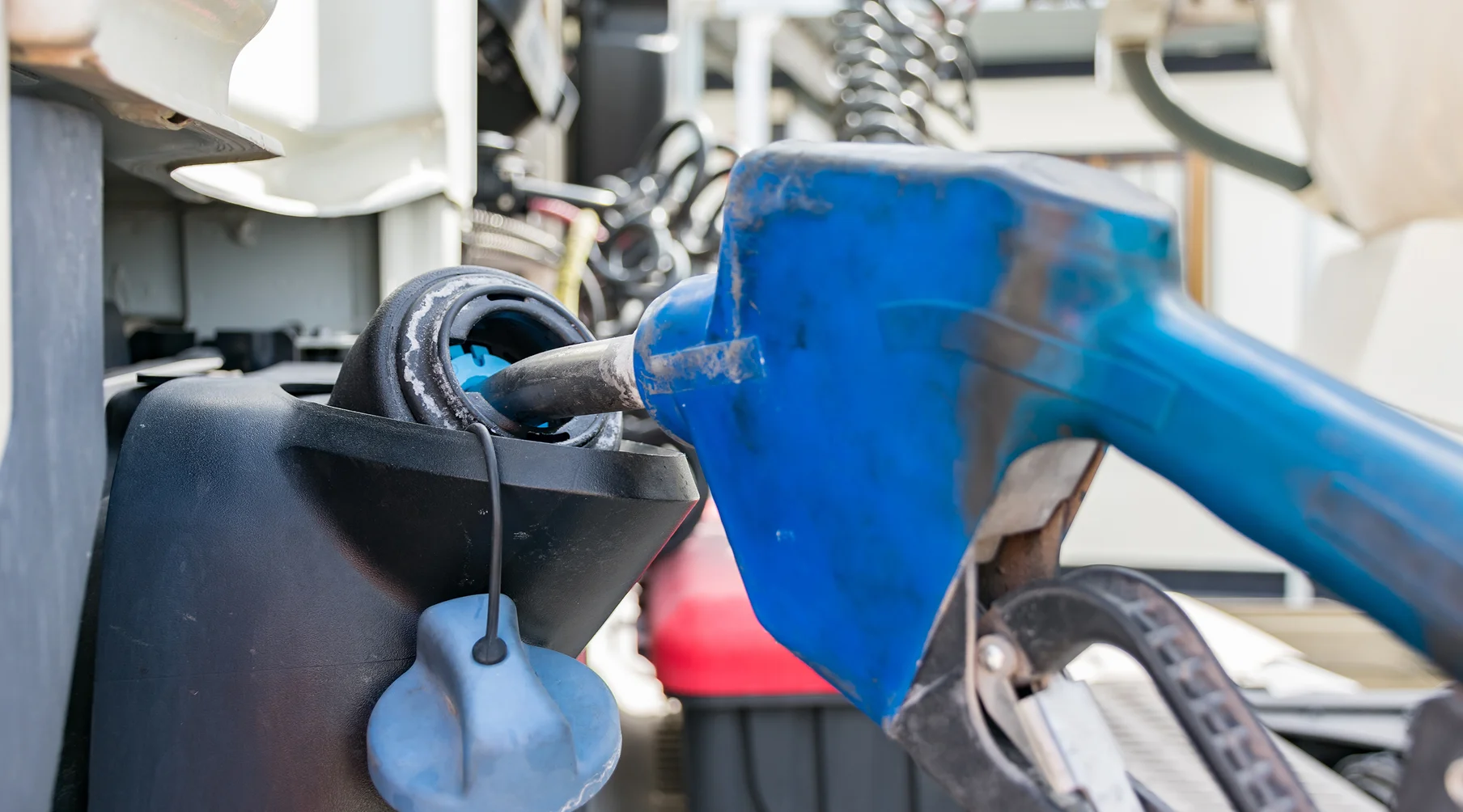
How to Store AdBlue So It Lasts
Keep AdBlue sealed, cool and out of direct sunlight, ideally between about -5°C and 25°C. Use containers and equipment made for AdBlue only, and use your oldest stock first. Those simple rules will get you close to the full shelf life.
- Keep it cool and shaded: below 25°C where possible, with IBCs and drums shaded in summer
- Keep containers sealed: tight caps stop evaporation and keep dirt out
- Use dedicated equipment: AdBlue corrodes some metals, so only use pumps and tanks made for it
- Label and rotate stock: date each container and use older stock first
- Don’t overbuy: a 10-litre container suits most drivers, whilst farms and fleets suit an IBC or dispenser
Storing AdBlue on the farm
On farms, AdBlue is usually kept in IBCs or bunded dispensers in a yard or machinery shed. The biggest risks are summer heat and contamination from dust, diesel and other chemicals. A shaded, covered spot and a dedicated dispenser will protect both your stock and your machinery.
Never be tempted to make your own from fertiliser urea, which isn’t pure enough and can ruin an SCR catalyst. We supply AdBlue to agricultural customers alongside red diesel and lubricants, so it can come on the same delivery.
What Happens If You Run Out of AdBlue?
Running out of AdBlue won’t damage your engine, but your vehicle will protect itself. Most go into a reduced power mode, and once you switch off, the engine won’t restart until you top up. You’ll get plenty of warning first, usually starting around 1,500 miles out.
If you do run dry, you’ll typically need to add a few litres before it will start again. Tractors behave in a similar way, cutting power until the tank is refilled.
For operators, it’s worth knowing that bypassing the system isn’t an option. The DVSA checks lorries for AdBlue emulators and other cheat devices at the roadside, and drivers face fines and prohibitions if one is found. Keeping a supply on site is far cheaper.
Frequently Asked Questions About AdBlue
Does AdBlue freeze?
Yes. AdBlue starts to freeze at around -11°C. That won’t harm it, and once it thaws it’s safe to use. Vehicles with SCR systems have heated AdBlue tanks and lines, so freezing in the vehicle isn’t usually a problem. Stored containers are best kept somewhere frost-protected.
Is all AdBlue the same?
Genuine AdBlue is made to the same recipe of 32.5% urea and 67.5% deionised water, produced to the ISO 22241 standard. Check the container mentions ISO 22241. Be wary of unusually cheap urea solutions that don’t, as poor-quality fluid can damage the SCR system.
Can I top up AdBlue with water?
No. Adding water dilutes the urea, which stops the SCR system working properly and will usually trigger a fault warning. Tap water also contains minerals that can damage the system. Always use AdBlue straight from a sealed container, without mixing it with anything.
Is AdBlue a fuel additive?
No. AdBlue is an exhaust fluid with its own separate tank and filler, usually with a blue cap. It must never go into the diesel tank. If you’re looking for treatments that go in the fuel itself, our guide to whether diesel additives work explains the difference.
Order AdBlue in Staffordshire, Cheshire, Shropshire and Derbyshire
Knowing how long AdBlue lasts makes it easier to buy the right amount at the right time. Whether you need a single container for the car or a regular bulk supply for a farm or fleet, we can help with delivery across Staffordshire, Cheshire, Shropshire and Derbyshire.
As a family-run, JET-approved supplier based in Cheadle, we deliver AdBlue from 10-litre containers to bulk quantities. If you’ve run short, our same-day emergency service includes filled drums for collection, and we supply commercial customers with AdBlue alongside DERV.
Get in touch with our team to arrange an AdBlue delivery or to talk through what you need.