
If you’ve ever wondered whether it’s worth adding something to your heating oil, or paying extra for premium kerosene, you’re not alone. Do home heating oil additives work? The honest answer is yes, but only for specific problems, and not every home needs them.
At Stoddards, we’ve supplied heating oil, kerosene and fuel additives to homes across Staffordshire, Cheshire, Shropshire and Derbyshire since 1966, so we see first-hand which products genuinely earn their keep. This guide explains what heating oil additives actually do, when they’re worth using in your tank, boiler or Aga, and when you can safely leave them on the shelf.
What Are Home Heating Oil Additives, and What Do They Do?
Home heating oil additives are treatments added to kerosene to solve or prevent a specific problem, whether that’s bugs building up in your tank, corrosion, or a boiler that isn’t burning as cleanly as it used to. They fall into a few main types, and matching the right one to the right problem is what decides whether it actually helps. One thing no additive can do is remove water. If water gets into your tank, it has to be physically removed, and our guide to fuel tank water damage explains what to look for.
- Corrosion inhibitors protect the metal inside your tank and around the burner from rust, which matters most in older steel tanks.
- Biocides kill the bacteria and fungi responsible for diesel bug, a sludge that forms when water finds its way into stored fuel.
- Deposit control additives help reduce build-up around burner nozzles and heat exchangers.
- Fuel stabilisers slow deterioration during storage and help extend shelf life.
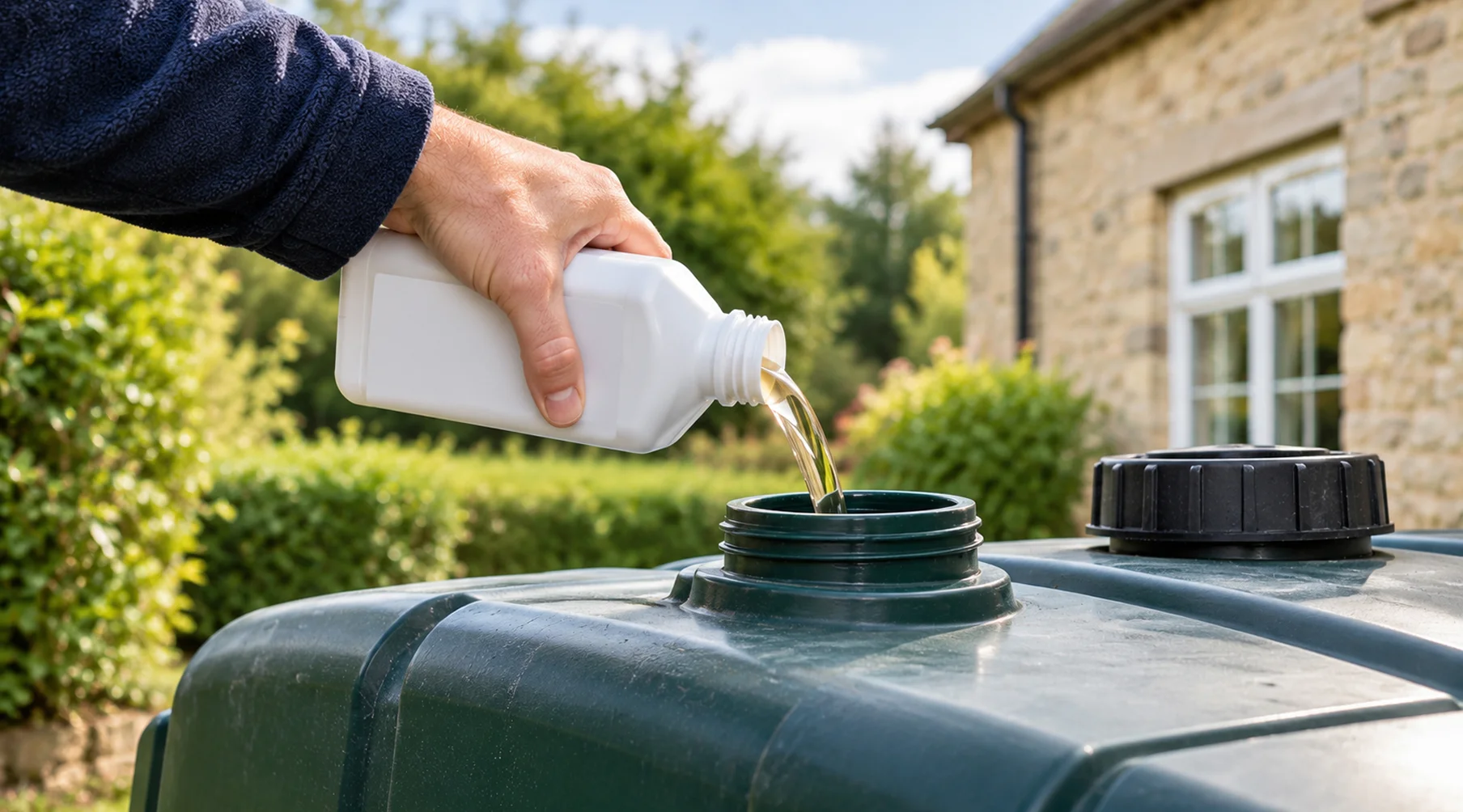
Premium kerosene comes with additives already blended in, mainly to help it burn cleanly and keep well in storage. It doesn’t include a biocide, though. Anti-bug treatments are a separate product that you add to your tank, ideally at the time of delivery so they mix in properly.
So, Do Home Heating Oil Additives Work?
Yes, when they’re treating a genuine problem. A corrosion inhibitor will protect a tank that’s starting to show early signs of rust. A biocide will kill the bacteria and fungi that cause diesel bug. What additives won’t do is transform a modern, well-maintained heating system into something it isn’t. They do work well as a preventative measure, though, helping a clean system stay cleaner for longer.
That’s an important distinction, because unlike a car that gets filled up and used within a week or two, a domestic heating oil tank often sits still for months at a time. Even without any biofuel content added, a tank exposed to daily temperature swings will draw in a small amount of condensation as it breathes, and that moisture settles at the bottom over time. The longer fuel sits, the more chance there is for that to become a problem, which is exactly why the case for treating stored heating oil is generally stronger than it is for a vehicle refuelled every week.
When Additives or Premium Kerosene Make a Real Difference
Homes That Go Months Between Deliveries
If you’re in a rural part of Staffordshire, Cheshire, Shropshire or Derbyshire and only use your boiler seasonally, or your tank is topped up once or twice a year rather than little and often, your fuel spends a lot longer sitting in one place. That’s exactly the situation where a corrosion inhibitor, fuel shelf life improver or biocide does genuine, measurable good.
Older Boilers
Older oil-fired boilers are more likely to develop sludge and soot deposits over time. A specific additive, such as Fast Flame, or premium kerosene can help keep the burner nozzle clean and the flame burning efficiently, which matters more here than in a newer, more tightly serviced system.
Protecting Your Tank From Corrosion
If your tank is due for a check anyway, a corrosion inhibitor is a sensible addition, particularly for steel tanks, as it protects the metal on the inside of the tank. It’s worth combining this with a proper visual inspection. Our guides on heating oil tank regulations and spotting tank damage cover what to look for.
Aga and Rayburn Cookers
Some suppliers recommend additives for Aga and Rayburn cookers to counter soot and carbonising at high burner temperatures, and plenty of owners use them without any trouble. Others report the opposite, and appliance guidance on this varies. If you own an oil-fired Aga or Rayburn, it’s worth checking with your engineer or the manufacturer before adding anything to the fuel, rather than assuming every additive marketed for boilers is automatically fine for a range cooker.
When You Might Not Need Them
Not every tank needs treating, and additives are not a substitute for proper maintenance. OFTEC recommends having oil-fired appliances serviced at least once a year, which does more for reliability and running costs than any additive on its own.
[Source: OFTEC, Home guide to why a liquid fuel-fired boiler should be serviced regularly]
- Regularly serviced, modern boilers: if your system is serviced annually and running well, additives are unlikely to make a noticeable difference.
- Fuel that’s used up quickly: if you’re a heavy user who takes several deliveries a year, there’s less time for water or sludge to build up.
- Already on premium kerosene: if your standard order already includes a premium fuel, adding a separate deposit control or stabiliser product on top rarely adds much. An anti-bug biocide is still a separate product, though.
Premium Kerosene vs Adding Your Own Additive
Both routes can work, and which makes more sense usually comes down to cost and convenience rather than one being definitively better. Premium kerosene is treated before it reaches your tank, so there’s nothing to remember and no dosing to get wrong. It typically costs a little more per litre. Adding your own bottle to standard kerosene can work out cheaper across a full tank, particularly if you only want to treat some deliveries, such as the one before winter or before a property sits empty for a while. If you’re not sure which makes more sense for your usage, it’s worth asking us when you place your order rather than guessing.

Using Heating Oil Additives Safely
Getting the dose right matters. Concentrated additives are designed to treat several thousand litres from a small bottle, so more isn’t better, and overdosing can cause its own problems. We always recommend dosing at the time of delivery so that the additive is properly mixed. Don’t combine different additive products unless the manufacturer confirms they’re compatible. For a fuller rundown on dosing and safe use, including biocide treatment for stored fuel more generally, see our guide on Do Diesel Additives Work.
Frequently Asked Questions
How often should I use heating oil additives?
Dose your tank at the time of each delivery, rather than following a fixed schedule. Adding the additive as the new fuel goes in means it mixes properly. Premium kerosene already contains some additives, but an anti-bug biocide is a separate product, so you’d still need to add one if you want to protect against diesel bug.
Can additives damage my boiler or Aga?
Used correctly and dosed as instructed, reputable additives are safe in a standard oil-fired boiler. Aga and Rayburn cookers are more of a grey area, so check with your engineer or the manufacturer before treating fuel for one.
Do additives stop my tank freezing or gelling in cold weather?
Kerosene is far less prone to waxing than road diesel, so cold-weather gelling is rarely an issue for UK domestic heating oil. Where additives help more in winter is protecting fuel that’s been sitting since summer, rather than the cold itself.
Is premium kerosene better value than a DIY additive?
It depends on your usage. Premium kerosene costs more per litre but needs no extra dosing. A standalone additive can be cheaper if you only need to treat fuel occasionally rather than on every delivery.
The Bottom Line
Home heating oil additives genuinely work when they’re solving a real problem like protecting a tank that’s starting to corrode, preventing and treating diesel bug, or keeping an older boiler burning cleanly. They’re far less useful as a blanket top-up for a well-maintained system on a fuel that’s used up quickly.
If you’re not sure whether your tank needs treating, or which option makes sense for your home, get in touch and we’ll talk you through it. Take a look at our domestic heating oil and kerosene options, including premium kerosene at the point of delivery. If you also store red diesel, DERV or a farm tank, our guide on Do Diesel Additives Work covers additives for stored fuel more broadly.